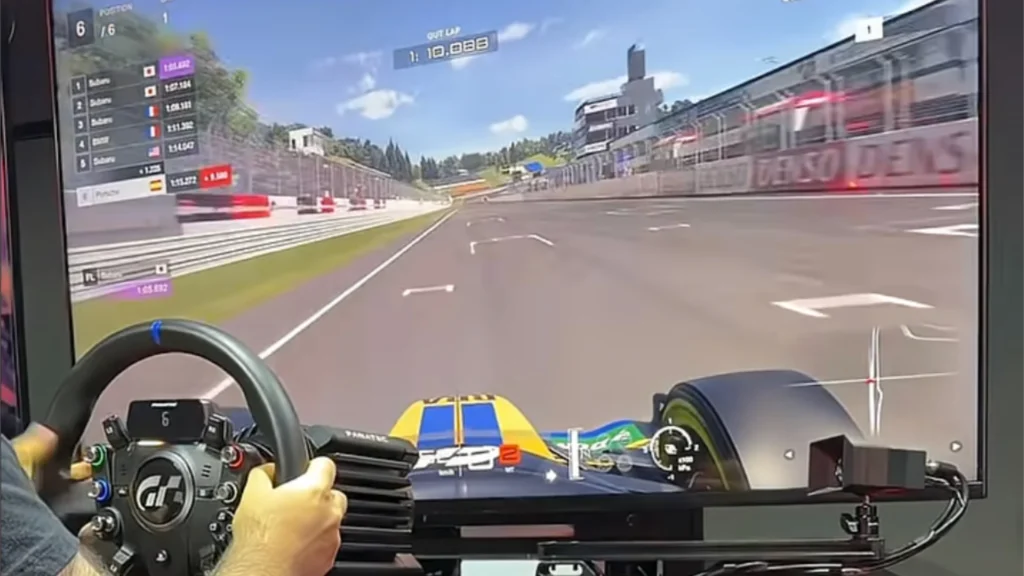
Fresh off its live public demo at the Gran Turismo World Series in Singapore, Sportsland SUGO is generating massive buzz across the sim racing community. Hands-on impressions and newly revealed onboard footage from Gran Turismo 7’s Spec IV Part 1 update have confirmed a major feature fans have been pleading for: SUGO will officially support full dynamic rain and wet weather conditions at launch on October 15, 2026.
This makes Sportsland SUGO the first post-launch track added to Gran Turismo 7 to feature full wet-weather surface dynamics, breaking a long dry streak for DLC circuits and opening up high-stakes wet setup opportunities for GT Planet and Sport Mode drivers alike.
SUGO Circuit Details & Wet Weather Confirmation
| Feature / Parameter | Confirmed Details |
|---|---|
| Track Location | Miyagi Prefecture, Japan |
| Release Date | Thursday, October 15, 2026 (Spec IV Update 1.72) |
| Wet Weather Support | Yes (Full rain, dynamic radar, and wet surface physics) |
| First Hot Lap Vehicle | Hyundai Elantra N Gr.4 |
| Key Track Landmarks | Dunlop Bridge, Uphill Final Corner, Blind Crest Esses |
Why Full Rain at SUGO is a Huge Deal for GT7
Since Gran Turismo 7’s 2022 release, community feedback has frequently pointed out that wet weather was limited to specific launch circuits (like Spa-Francorchamps, Nürburgring, Suzuka, and Red Bull Ring). Post-launch additions such as Road Atlanta, Watkins Glen, Grand Valley, and Eiger Nordwand were restricted to dry surface conditions.
Polyphony Digital’s inclusion of a full wet-weather surface layer for SUGO marks a major step forward for GT7’s dynamic physics model. Located in the mountains of Miyagi Prefecture, the real-world SUGO is famous for its localized microclimates and sudden, torrential downpours. Translating this environmental volatility into GT7 means players will have to contend with rapidly changing surface grip, wet kerbs, and dynamic dry lines during endurance lobbies and daily races.
First Full Onboard Lap Analysis: The Hyundai Elantra N Gr.4
Footage captured from the playable Spec IV floor demo in Singapore showcased a complete onboard lap of Sportsland SUGO behind the wheel of the Hyundai Elantra N Gr.4. The lap highlights exactly why SUGO is considered one of Japan’s most technical and dangerous circuits:
- Turn 1 & 2 Compression: A heavy downhill deceleration zone into a double-apex right-hander. Under wet conditions, lockups here will wash cars straight off into the gravel trap.
- The Blind Esses & Dunlop Bridge: High-speed direction changes over elevation crests. Onboard telemetry shows mid-corner unweighting where smooth throttle control is mandatory to avoid snap oversteer.
- The 10% Gradient Uphill Final Turn: SUGO’s iconic signature. Drivers plunge down from Turn 12 before climbing a steep 10% incline through a sweeping, high-G right-hand corner onto the pit straight. Missing your apex speed here ruins terminal velocity all the way down the front straight.
Sim Rig Preparation: Tuning Direct Drive & Pedals for Wet SUGO
Driving a wet, elevation-heavy circuit like SUGO requires hyper-communicative force feedback to detect hydroplaning and front-end scrub before you lose the chassis:
- Direct Drive Torque Linearity: When transition dampness builds on the track radar, high damping will mask the drop in lateral tire grip. Keep damping low and linear torque enabled to feel the exact moment water channels build up under your tires. Review our baseline Fanatec GT DD Pro 8Nm Gran Turismo Settings Guide to prepare your wheel base.
- Brake Thresholds on Wet Asphalt: In wet conditions, stabs over 70% brake pressure will instantly trigger ABS chatter, extending stopping distances into Turn 1. A firm load-cell pedal with a progressive elastomer stack allows you to meter soft, precise threshold pressure under heavy deceleration.
Gran Turismo 7 Spec IV Part 1 drops as a free update on Thursday, October 15, 2026. Keep your rig calibrated, track the weather radar, and keep it pinned!